
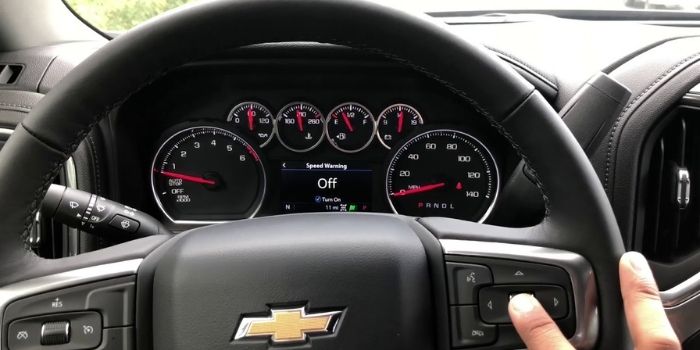
The speed limiter is a device that is installed on the vehicle to limit its maximum speed. This is usually for safety reasons, to prevent the driver from going too fast and causing an accident.
In some cases, the speed limiter on a car may also be used to save fuel or to reduce wear and tear on the engine.
But before you proceed with removing the speed limiter on your vehicle, remember that it can make your vehicle less safe to drive. Also, it can make your vehicle less fuel-efficient and can damage your engine
In some areas, it is perfectly legal to disable the speed limiter on your vehicle. However, in other areas, it is illegal to do so.
So, before you have the speed limiter on your vehicle removed, it is important to check the laws in your area. This way, you can avoid getting into trouble with the law.
Why Remove a Car Speed Limiter?
Ever wondered why your car suddenly loses its enthusiasm right when the road opens up?
That’s your speed limiter—a built-in electronic nanny designed to keep your car’s velocity under a predefined threshold.
While it serves important safety and regulatory purposes, there are a few legitimate reasons enthusiasts might consider removing it.
For starters, if you’re an off-road or track enthusiast, removing (or rather reprogramming) the limiter allows your car to unleash its full performance potential.
Many vehicles are mechanically capable of higher speeds than the factory settings permit—manufacturers simply restrict them to comply with legal limits, tire ratings, or emission standards.
Once the limiter is lifted (through ECU remapping or performance tuning), you can experience the true upper range of your vehicle’s power band.
Another reason is performance optimization. Certain speed limiters can interfere with the engine management system, preventing it from reaching ideal power or torque curves during performance driving.
On tuned or modified engines, this can even cause awkward throttle cutoffs or inconsistent acceleration, especially during high-speed tests or track sessions.
And yes, ironically, in rare cases, poorly calibrated speed limiters can lead to engine stress or misfires when they abruptly restrict fuel or ignition at preset speeds.
Removing or recalibrating them under professional supervision ensures smoother, safer high-speed behavior without risking overheating or mechanical strain.
5 Risks of Removing a Car Speed Limiter
Before you go full throttle into removing your car’s speed limiter, it’s worth understanding what you’re really trading off.
Sure, the idea of “no limits” sounds thrilling — but from an engineering standpoint, that limiter isn’t a killjoy; it’s a carefully calibrated safety mechanism designed to protect your engine, drivetrain, and, most importantly, you.
1. Engine and Drivetrain Stress
A speed limiter isn’t just about capping speed — it’s about preserving mechanical harmony.
Every engine and drivetrain component is designed to operate within specific thermal and mechanical tolerances. When you remove the limiter, you risk pushing those systems beyond their intended safe zones.
For instance, on a BMW 3-Series (G20) or Ford Mustang GT, the limiter is often set to protect the Z-rated tires and drivetrain gearing.
Exceeding this limit increases frictional heat, which can cause gearbox fluid breakdown, differential overheating, or even con-rod bearing wear.
Continuous high-speed runs can also overwork the radiator and intercooler, degrading coolant and oil efficiency far faster than under normal use.
2. Tire and Aerodynamic Limitations
Manufacturers calibrate the limiter based on the tire’s speed rating (for instance, H-rated for up to 210 km/h or W-rated for up to 270 km/h).
Disabling the limiter without upgrading your tires could result in a blowout once you exceed the rated limit — a catastrophic failure at high velocity.
Vehicles like the Toyota Camry, Honda Civic, or Hyundai Creta are not aerodynamically optimized for extreme speeds.
Beyond 180–200 km/h, aerodynamic drag increases exponentially, leading to instability, reduced steering precision, and extended braking distance.
Even minor crosswinds can significantly affect control due to unbalanced lift forces.
3. Warranty and Legal Concerns
The moment you alter your ECU maps or bypass the limiter, consider your manufacturer’s warranty null and void.
OEMs like Mercedes-Benz, Audi, and Volkswagen can detect ECU tampering through stored flash counters or checksum mismatches — even if you later reflash the stock software.
Additionally, in regions like the EU, UK, and India, modifying ECU parameters linked to emissions or safety systems is legally restricted for road use.
It can also complicate insurance claims, as your insurer may deny coverage if the vehicle’s software has been modified without disclosure.
4. Fuel Efficiency and Emissions
Running an engine at sustained high RPMs drastically alters fuel efficiency.
The ECU’s fuel and ignition maps are not optimized for post-limiter speeds, leading to incomplete combustion, excess fuel delivery, and potential engine knocking (pre-detonation).
For turbocharged cars such as the Volkswagen GTI or Kia Seltos Turbo, pushing beyond factory speed parameters can cause excess turbo boost, raising exhaust gas temperatures (EGT) and over-stressing the turbine.
The result? Increased carbon buildup, reduced catalytic converter efficiency, and accelerated wear of engine internals.
5. Safety Systems Compatibility
Modern cars don’t operate in silos — systems like ABS, traction control, electronic stability control (ESC), and adaptive cruise control are all synchronized with the limiter’s logic.
Removing it without recalibrating these systems can confuse the vehicle’s CAN bus network, leading to erratic behavior under emergency conditions.
For instance, in vehicles like the BMW X5 or Audi A4, the ECU coordinates torque reduction and braking force during traction loss.
If the limiter is bypassed without proper tuning, these safety systems may miscalculate torque thresholds, leading to delayed intervention or even instability during high-speed cornering or braking.

How to Turn off the Speed Limiter On Your Car?
Removing a speed limiter isn’t as simple as unplugging a little black box under your dashboard.
In modern cars, it’s a software-based restriction programmed directly into the Engine Control Unit (ECU) — the digital brain that manages everything from fuel injection to throttle response.
That means removing or recalibrating it demands both technical expertise and specialized tuning tools.
Here’s how the process generally works — the right way:
Step 1: Review Your Owner’s Manual & Manufacturer Policy
Start by checking whether your vehicle’s manufacturer provides any factory-supported performance or “track mode” options.
Some high-end or sports models allow authorized dealers to unlock higher limits legally and safely.
Step 2: Understand Your ECU Configuration
Identify what kind of ECU your car uses and whether it supports OBD-II tuning or requires bench programming (direct ECU access). This determines how the limiter can be modified.
Step 3: Back Up ECU Data
Before making any changes, professional tuners always back up the stock ECU map. This allows you to restore factory settings if something goes wrong or you need to re-enable the limiter later.
Step 4: Use Professional Tuning Software
With a certified tuner or performance shop, use professional software such as ECUFlash, HP Tuners, or COBB Accessport to access and adjust the limiter parameter.
During this stage, other performance maps — like fuel, ignition, and torque limits — may be fine-tuned for stability at higher speeds.
Step 5: Recalibrate and Test
Once the limiter is modified, the car is typically tested on a chassis dynamometer (dyno) to confirm safe operation, air-fuel ratios, and mechanical limits.
Post-tuning, the ECU is rechecked for errors or fault codes.
Step 6: Perform Real-World Validation (Safely)
After everything is verified, test the car only in controlled conditions — such as a racetrack or closed course.
Always ensure your tires, brakes, and suspension are rated for higher-speed performance.
Can i disable or remove the speed limiter myself?
Technically, yes, but practically you probably shouldn’t — unless you know your way around ECU maps, diagnostic tools, and engine control software.
Modern speed limiters aren’t just a switch you can flick off; they’re deeply integrated into your car’s Engine Control Unit (ECU).
Removing or modifying them involves reprogramming the ECU firmware, accessing restricted parameters, and recalibrating systems like fuel injection, ignition timing, and traction control to ensure the engine performs safely at higher speeds.
Without the right tools (like an OBD-II tuning interface) and expertise, you risk corrupting the ECU or triggering failsafe modes that can cripple your car’s performance.
For this reason, it’s strongly recommended to let a certified tuner or performance mechanic handle the job. They can safely remove or recalibrate the limiter using professional-grade software while ensuring all engine protection protocols remain intact.
What is the cost of disabling or removing a speed limiter?
The cost of removing a speed limiter will vary depending on the make and model of your vehicle.
However, in most cases, you can expect to pay between $80 and $200 for the service. The cost could be even higher if you have a particularly high-end vehicle.
No matter what, it is important to make sure that you find a reputable and experienced mechanic to remove your speed limiter. This will ensure that the job is done correctly and that your vehicle is not damaged in the process.
Why Does Your Vehicle’s Speed Limiter Break Down?
The key reasons why your truck’s speed limiter breaks down and you might want to remove the speed limiter are:
Damaged sensor: The speed sensor is one of the most important parts of the speed limiter system. If this sensor becomes damaged, it can cause the entire system to fail.
Malfunctioning PCM: The power control module is responsible for sending signals to the speed sensor. If this module malfunctions, it can cause the speed sensor to fail as well.
Failed fuse: The speed limiter system is powered by a fuse. If this fuse fails, the system will not be able to function properly.
Circuit breakdown: If any of the circuits in the speed limiter system break down, it can cause the system to fail.
The camera goes bad: The camera is responsible for sending signals to the speed sensor. If this camera goes bad, it can cause the speed sensor to fail.
Other internal software problems: There are a number of other software problems that can cause the speed limiter system to fail. These include issues with the programming, coding, or firmware.
Maintaining Your Car’s Performance After Removing the Speed Limiter
Once your car is free from its electronic leash, keeping it in top shape becomes even more crucial.
Removing a speed limiter doesn’t just unlock higher speed potential — it also demands higher responsibility in maintenance and tuning.
Here’s how to keep your machine performing safely and efficiently:
1. Upgrade Your Tires and Brakes
With the limiter gone, your car can now reach speeds that put greater stress on tires and brakes.
Use high-performance, speed-rated tires (V, W, or Y ratings) and upgraded brake pads and rotors to ensure stability and stopping power.
Never skimp here — your tires and brakes are the only things connecting you to the road.
2. Regularly Monitor Engine Health
At higher speeds, engine temperature, oil viscosity, and fuel-air ratios play a huge role in reliability.
Use synthetic high-temperature oil, and check coolant levels and pressure regularly.
If your car has a turbo, inspect boost levels and intercooler efficiency frequently.
3. ECU Recalibration and Data Logging
After removing the limiter, make sure your ECU maps are professionally tuned. This ensures correct fuel delivery, ignition timing, and turbo pressure across the extended speed range.
A data logger or OBD-II monitoring tool can help track key metrics like air-fuel ratio (AFR), exhaust gas temperature (EGT), and throttle response.
4. Suspension and Aerodynamics Check
At higher speeds, aerodynamic lift and body roll become more pronounced. Consider sport-tuned suspension, stiffer anti-roll bars, or a rear spoiler to enhance high-speed stability and grip.
5. Follow Shorter Service Intervals
Since performance driving accelerates wear, reduce your oil change and service intervals by about 25–30%.
Fresh fluids and filters help maintain power output and protect the engine from high-temperature stress.
6. Practice Responsible Driving
Even the best-tuned cars can turn unpredictable beyond their design envelope.
Keep your high-speed testing limited to closed tracks or controlled environments, and remember — skill and safety should always outrun speed.
Final Thoughts
Removing a car’s speed limiter isn’t about reckless speed — it’s about understanding and unlocking your machine’s true engineering potential.
However, with great horsepower comes greater responsibility. While it’s tempting to see what your car can really do, remember that the limiter is there for a reason: to balance performance, safety, and longevity.
If you do choose to remove it, do it the right way — with professional help, proper tuning, and an honest respect for the car’s mechanical and aerodynamic limits. Upgraded tires, brakes, and cooling systems are not optional extras; they’re essential safety investments.
Ultimately, the goal isn’t just to go faster — it’s to go smarter. A well-tuned, limiter-free car that performs reliably on a track is far more impressive than one that simply breaks its limits on a highway.
So, if you decide to give your car a taste of freedom, make sure it’s earned — and that you’re ready to handle it. After all, real performance isn’t measured by top speed alone, but by how confidently you control it.

I know people who love their recreational vehicles (RVs) and treat them like a second home. Usually, they take their Read more
Jump-starting seems straightforward—connect the cables, give the dead battery a boost, and you’re back on the road. But when it Read more

When it comes to hiding scratches and dirt, a few colors stand out. We’ve all been there. You take your Read more
If you’ve ever heard car enthusiasts talk about “unlocking hidden horsepower” or “waking up the engine,” chances are they’re referring Read more

Based in Orem (Utah) John Paterson graduated from Utah Valley University and has begun writing in 2009. He has a large wealth of experience in writing articles related to cars, automotive repair, wheels, cleaning/maintenance, and much more. He has also written instructional articles in a similar niche for a few online publications as well. Currently, he works as a mechanic in his personal garage shop where he loves serving his countrymen from his heart.