
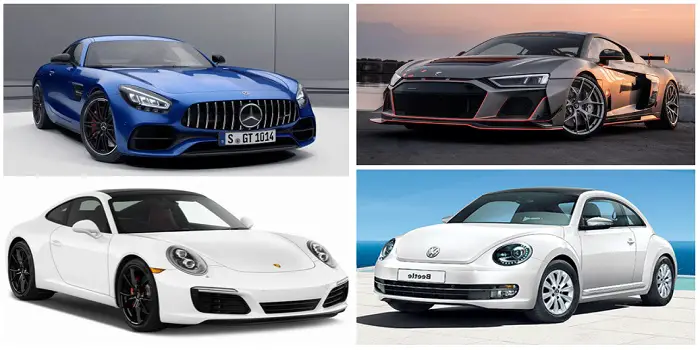
The first thing that comes to mind when thinking of German cars is built quality and efficiency.
It’s not rare to come across a Mercedes, BMW, or Audi with over 200,000 miles on the odometer that still looks and feels brand new.
For many years, German automakers have been world-renowned for producing reliable, refined, and magnificent vehicles that survive the test of time and usage.
This is a subjective list, and you may not find your favorite German car on it, but there are plenty to pick from.
So here are the top 10 of what we consider the greatest German cars of all time.
10 Greatest German Cars of All Time
German sports cars are special because they blend precision engineering, performance, and luxury like few others.
Brands such as Porsche, BMW, Audi, and Mercedes-AMG are known for their obsessive attention to detail, balance, and driving dynamics.
Every component—from the engine to the suspension—is finely tuned for speed, stability, and responsiveness.
They also emphasize advanced technology, superior build quality, and timeless design.
Unlike many high-performance cars that focus solely on power, German sports cars deliver a refined driving experience that’s equally thrilling on highways and racetracks, earning them a reputation for being the perfect marriage of art and engineering.
If you are considering buying one of the greatest German cars of all time, here are they:
1. Mercedes AMG GT
Mercedes has to be the first brand name that comes to mind when thinking about automotive aficionados since it is linked with Germany.
This German-designed car has not only made a reputation for itself in the automotive business, but it has also continued to deliver on its promise and has moved from glory to glory.
The Mercedes-Benz AMG GT’s large hood is the first thing you see, but below lies a 4-liter V8 twin-turbo engine with a 7-speed automated gearbox that gives an exhilarating ride, pushing you from 0 to 60 in 3.7 seconds.
Furthermore, the cabin is near-perfect, outfitted with everything you could want in a premium car. This vehicle embodies elegance, style, and the good life.
2. BMW M3
When it came to creating execution models of creative cars, BMW’s in-house motorsport team established a high standard with the E30 age 3 Series.
The M3 was a fantastic triumph in motorsport, and it has been replicated with rapid yet refined automobiles that are a delight to drive.
Since the E30 model exploded into the world in 1986, every subsequent 3 Series has had an extremely speedy M division rendition.
3. Audi R8
The Audi R8 was previewed in 2003 as the Le Mans Quattro concept vehicle, which commemorated the marque’s trio of back-to-back triumphs on the Circuit de la Sarthe in the early 2000s.
Audi’s R8 Le Man’s prototype had added two more straight 24 Hours wins to its score by the time the production version arrived in 2006, and the R8 road car possessed a specification that suggested Audi had entered the GT car elite.
The smaller-engined 4.2 FSi model, available with V8 power or later, a 5.2-liter V10 as well, was the purist’s sweet spot in the line-up.
Not only did it seem more agile than the V10 without sacrificing much in terms of actual performance, but it was also available with a manual gearbox, which we called one of the most intuitive, smooth, and pleasurable changes in production.
The R8 driving experience was also terrific, with a perfectly balanced and composed mid-engine chassis that provided outstanding performance while maintaining a soft ride that made the R8 a delight to drive.
4. Porsche 911
You can’t discuss German vehicles without discussing Porsche, and you can’t discuss Porsche without mentioning the brand’s trademark set of wheels: the 911.
The world first saw the Porsche 901 at the 1963 Frankfurt IAA Motor Show, which was renamed 911 for its 1964 market debut.
Many variants followed, including the Targa, Carrera, and Turbo, but the car that represents the Porsche brand in terms of beauty and performance remains relatively identical today.
5. Volkswagen Beetle
The Beetle, also known as the Volkswagen Type 1 or Käfer (German for “beetle”), is a five-passenger automobile with a rear engine that sets it apart from the front-engine type.
Originally constructed for the system at the time, it had 25 horsepower and a peak speed of 62 mph, but after the Cold War, its power increased to 36 and up to 40 hp.
It is also the most produced car, with over 21 million units built, and the longest-running. However, it was eventually surpassed by the Golf model.
6. Volkswagen MK1 Golf
When the MK1 Golf debuted in 1974 (’75 in the United States as the Rabbit), it was supposed to replace the Beetle, but it never did.
However, it did become one of the world’s best-selling vehicles and a symbol of affordability, dependability, and fun.
It was a landmark event, heralding VW’s transition from rear-wheel drive to front-wheel drive, as well as the introduction of water-cooled, front-mounted engines.
The legendary Golf, now in its eighth generation, is the quintessential hatchback, the bestselling car in VW history, and one of the world’s three most-purchased automobiles.
7. Mercedes Benz 300 SL
This vintage beauty was hailed as the quickest and best production automobile of its day.
It was manufactured by Daimler-Benz AG and debuted at the 1954 New York Auto Show, based on a concept proposed by Max Hoffman to produce a scaled-down Grand Prix automobile.
This two-seat coupe, subsequently available as an open roadster from 1957 to 1963, had gull-wing doors, a 3.0-liter engine, and the world’s first fuel-injected, producing the world’s fastest top speed at the time.
It was eventually superseded by the Mercedes 230 SL, and now, this successful and famous automobile has a modern-day version.
The Mercedes-Benz SLS AMG, which retains its predecessor’s characteristic gull-winged doors.
The 300 SL is an automotive classic that defies current sports-car standards by providing ample comfort and great embellishments.
It features a rich finish and a timeless design idea that will have an impact on the automobile industry for many years to come.
8. Audi Quattro
Audi in 1981 demonstrated that two-wheel-drive cars with rear-mounted engines, capable enough of dominating the rally circuit.
Throughout the decade, Audi’s four-wheel-drive Quattro system hammered the competition in key rally events, forcing Audi to adapt the motorsport idea for the production of road cars.
Since then, every Audi has included Quattro’s four-wheel-drive technology, and the name has become associated with AWD luxury.
9. Porsche 356 Speedster
While the 911 has become Porsche’s hallmark, the 356 Speedster established the benchmark by which all 911s would be measured.
It was a lightweight, quick, balanced-handling rear-engined, rear-wheel-drive sports car that radiated flair despite being on the modest side in terms of luxury and convenience.
For the first two years of manufacturing, it flew beneath the radar, and just 50 of them were created.
However, it won races and sales soared after that up to its 4 generations.
10. Mercedes E-Class
The E-Class is Mercedes-best-selling Benz’s car, and that’s no surprise considering that it was crowned Executive Car of the Year by Auto Express in 2016, and UK Car of the Year in 2017.
The E-Class is well-liked for its smooth driving, powerful engine, and sleek, roomy cabin.
It also has a reassuringly high safety rating and solid environmental credentials.
Overall, it’s a one-of-a-kind german car that people from all over the world appear to admire for its beauty and sophistication.
What are the Rarest German Sports Machines?
Among German exotics, rarity often defines prestige. Take the Mercedes-Benz CLK GTR—only 25 road-going units were ever built in the late ’90s for homologation purposes.
Designed primarily as a Le Mans race car, it features a 6.9-liter V12 engine pushing 604 horsepower and a top speed of 344 km/h (214 mph).
The body, made entirely from carbon fiber, weighs just over 1,500 kg, giving it a race-car power-to-weight ratio that few production vehicles can match even today.
Similarly, the BMW M1, with just over 450 units produced, represents another layer of rarity.
Its mid-engine layout, penned by Giugiaro and engineered by BMW Motorsport, gave it a perfect 50:50 weight balance—a hallmark of German engineering finesse.
Both cars symbolize a time when racing spirit, exclusivity, and craftsmanship converged to create automotive legends.
What are the Fastest German Sports Car Ever Built?
When it comes to sheer speed, the Porsche 918 Spyder takes the crown as Germany’s fastest production sports car.
This hybrid hypercar combines a 4.6-liter naturally aspirated V8 engine with two electric motors, generating a jaw-dropping 887 horsepower and 944 lb-ft of torque.
With all-wheel drive and an advanced 7-speed PDK dual-clutch transmission, it rockets from 0–100 km/h (0–62 mph) in just 2.6 seconds, topping out at 345 km/h (214 mph).
What makes the 918 Spyder remarkable isn’t just its straight-line speed—it’s how it blends efficiency with brute force. Its carbon-fiber-reinforced polymer monocoque chassis, torque vectoring, and adaptive suspension keep it razor-sharp on corners.
Add its ability to drive silently in electric mode for up to 30 km, and you get a car that fuses future-ready technology with old-school performance DNA.
What’s the Most Engaging Modern German Sports Car to Drive
If driving feel is the true measure of greatness, few cars come close to the Porsche 911 GT3 (992 generation).
Powered by a 4.0-liter naturally aspirated flat-six producing 502 horsepower and revving to 9,000 rpm, it delivers an almost spiritual connection between driver and machine.
Available with a six-speed manual or PDK dual-clutch gearbox, it offers purists the choice between tactile engagement and lightning-fast shifts.
The GT3’s rear-wheel steering, double-wishbone front suspension (borrowed from Porsche’s racing program), and meticulously tuned aerodynamics provide uncanny precision in corners.
It’s not just fast—it communicates every inch of the road, rewarding skilled drivers with feedback that feels mechanical, not digital.
In an age of turbocharging and automation, the 911 GT3 stands as the ultimate analog hero in a digital world—pure, visceral, and proudly German.
Conclusion
German engineering has long been synonymous with precision, performance, and passion—and their cars are living proof of it.
Whether it’s the symphony of mechanical harmony under the hood or the flawless balance between comfort and control, these machines redefine what driving excellence means.
Built with a relentless pursuit of perfection, they’ve shaped global automotive standards for decades.
From timeless design to cutting-edge innovation, every model reflects an unwavering commitment to craftsmanship.
In the end, German cars aren’t just modes of transport—they’re experiences, each crafted to stir emotion, ignite adrenaline, and remind us why driving still matters.
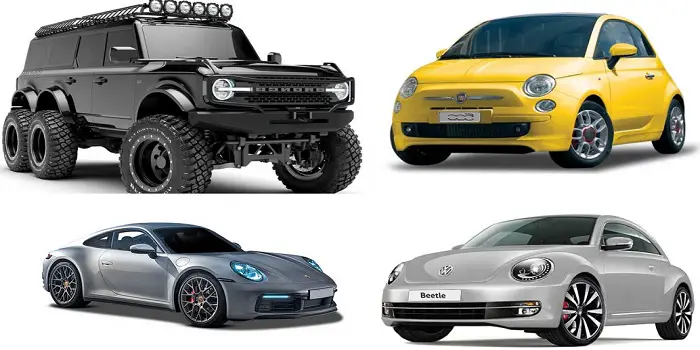
It seems like the clock is turning back when it comes to car designs as new and modern machinery is Read more
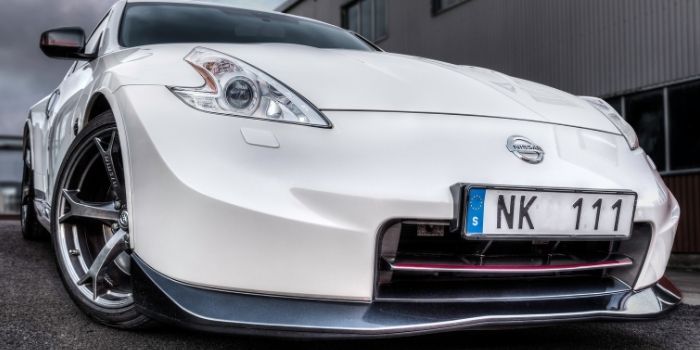
If speed had a face, it would probably wink at you from behind the wheel of a Nissan. From zipping Read more
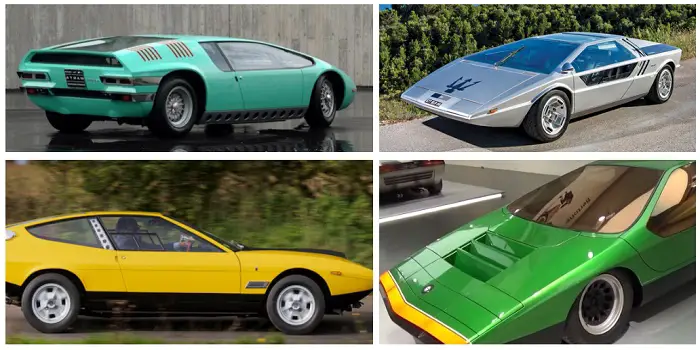
Wedge-shaped automobiles are among the most brilliant automobile designs ever created that came out of Italy in the late 1960s Read more
Carrozzeria Ghia is a car and bodywork design company founded by Giacinto Ghia and Gariglio as Carrozzeria Ghia in 1916 Read more

Based in Orem (Utah) John Paterson graduated from Utah Valley University and has begun writing in 2009. He has a large wealth of experience in writing articles related to cars, automotive repair, wheels, cleaning/maintenance, and much more. He has also written instructional articles in a similar niche for a few online publications as well. Currently, he works as a mechanic in his personal garage shop where he loves serving his countrymen from his heart.