
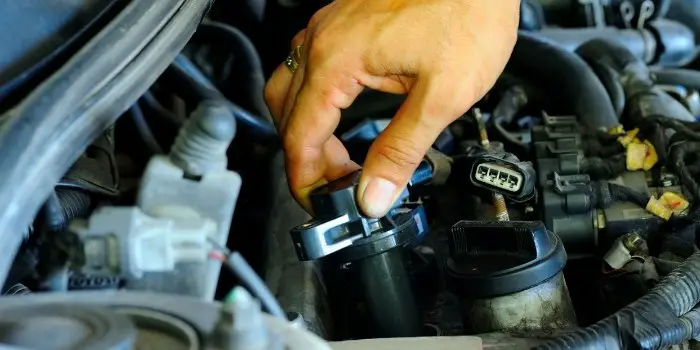
When your BMW suddenly starts feeling more like a sputtering lawn mower than the silky, purring machine you know it to be — chances are, the ignition coils are waving a white flag.
Whether it’s your BMW F30 320i, a rugged BMW X3, or even the beloved BMW Ninet motorcycle, bad ignition coils can turn your smooth Bavarian drive into a jerky nightmare.
But don’t worry — ignition coils are one of those parts that fail more often than they should, yet they’re also among the easiest to diagnose and replace once you know the signs.
Let’s dive under the hood and break down exactly how to detect a failing ignition coil in your BMW — without losing your cool (or your weekend).
Causes of Failing BMW Ignition Coils
Ignition coils may seem small, but they play a massive role — transforming your car battery’s 12 volts into the 20,000+ volts needed to spark the air-fuel mixture in each cylinder.
When they start failing, it’s not always random. Here’s what usually causes the trouble:
1. Age and Heat
BMW engines, especially turbocharged ones like the BMW N13, generate immense heat. Over time, this heat breaks down the internal insulation and plastic casing of the coils.
Once they’re heat-soaked and brittle, it’s only a matter of time before they short out or stop producing enough spark.
2. Oil and Moisture Contamination
Leaky valve cover gaskets are a common BMW annoyance. When oil seeps into the spark plug wells, it can soak the ignition coil boots, causing misfires or even complete coil failure.
Similarly, moisture intrusion from washing the engine bay or driving through deep water can trigger electrical shorts.
3. Worn or Incorrect Spark Plugs
When spark plugs are worn out or not properly gapped, the ignition coil has to work overtime to produce a stronger spark.
This excessive workload overheats the coil, leading to premature burnout.
4. Faulty Wiring or Connectors
Sometimes, it’s not the coil’s fault at all. Damaged wiring harnesses or corroded connectors can interrupt current flow, mimicking a coil failure.
Always inspect the connectors before declaring the coil dead.
5. ECU or Ignition Control Issues
Modern BMWs rely heavily on computer-controlled ignition timing.
If your ECU or ignition control module is faulty, it can send incorrect voltage pulses to the coils — again leading to coil overheating or failure.
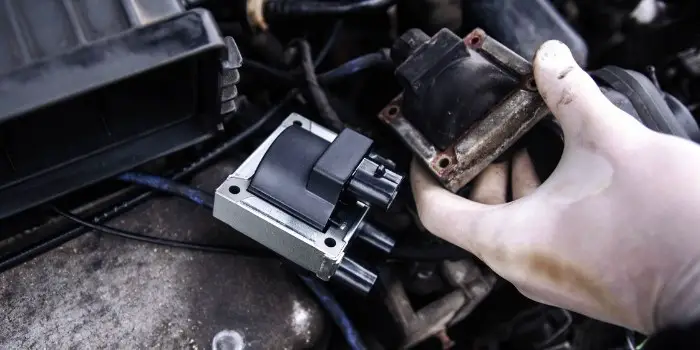
Symptoms of a Bad Ignition Coil in a BMW
A failing ignition coil won’t always throw a tantrum right away — but your BMW will definitely start “talking” to you through its performance.
Here are the most common symptoms to watch for:
1. Rough Idle or Engine Misfire
The moment your car starts shaking at a red light like it’s got the chills, you may have a misfire. Each coil corresponds to a cylinder, and when one fails, that cylinder stops firing properly.
The engine vibrates, runs unevenly, and may even stall.
2. Loss of Power and Poor Acceleration
If your BMW suddenly feels sluggish or refuses to climb RPMs smoothly, a coil might be struggling.
This is especially noticeable in turbocharged models like the BMW F30 320i, where smooth boost delivery depends on consistent spark in every cylinder.
3. Decreased Fuel Efficiency
When one or more coils fail, unburned fuel exits the exhaust, wasting petrol and fouling your catalytic converter.
If you notice your fuel gauge dropping faster than usual — and you haven’t developed a heavier foot — a bad ignition coil could be the culprit.
4. Engine Light or Warning Messages
One of the first hints you’ll get is the Check Engine Light (CEL) or “Drivetrain Malfunction” warning on the dashboard.
This is your BMW’s way of saying, “Something’s wrong in the combustion department.”
5. Backfiring or Popping Sounds
If a misfire is severe, unburnt fuel can ignite in the exhaust, producing small bangs or pops. It sounds sporty, but it’s not — it’s your exhaust begging for mercy.
6. Hard Starting or No Start
A completely dead coil (or multiple coils) can prevent the engine from starting. This is rare, but in older models like the BMW E60, it’s not unheard of.
7. Vibrations and Jerkiness While Driving
If the car hesitates, jerks, or vibrates during acceleration, you’re likely driving with a weak spark.
On a BMW Ninet, this might feel like irregular throttle response, while in an X3, it can feel like power surging on and off.

BMW Error Codes for Failed Ignition Coils
When your Check Engine Light comes on, it’s not just a random light show. BMW’s onboard diagnostics (OBD-II system) stores error codes that pinpoint the issue.
Here are the most common BMW error codes for bad ignition coils:
| Error Code | Meaning |
|---|---|
| P0300 | Random/multiple cylinder misfire detected |
| P0301 – P0306 (or P0308) | Misfire detected in a specific cylinder (e.g., P0302 = cylinder 2 misfire) |
| 29CE / 29CF / 29D0 / 29D1 | BMW-specific misfire codes for each cylinder |
| 2E19 | Ignition coil control circuit failure |
| 2D06 / 2D0F | Ignition output stage or signal fault |
| 140001 / 140010 | Cylinder-specific misfire at high load or idle |
If you see any of these when scanning your car, odds are you’ve got a failing ignition coil (or possibly a plug issue).
Tip: You can use an inexpensive OBD-II scanner to check these codes yourself — it’s the fastest way for anyone wondering “how to check a BMW coil” without running to a workshop.
How to Diagnose and Replace BMW Ignition Coils?
Here’s where the fun (and learning) begins. Diagnosing a bad ignition coil isn’t rocket science — and replacing one is even easier.
Let’s go through both steps.
Step 1: Visual Inspection
Start by removing the engine cover and inspecting the ignition coils sitting on top of the spark plugs. Look for:
- Cracks or burn marks on the coil body
- Oil or moisture contamination
- Loose or corroded connectors
If one looks suspiciously different — darker, oily, or melted — it’s probably your problem child.
Step 2: Swap Test (Cylinder Isolation)
If you’re not sure which coil is faulty, try this simple DIY trick:
- Note which cylinder the misfire code points to (e.g., P0303 = cylinder 3).
- Swap the suspected coil with one from another cylinder.
- Clear the codes and drive for a few minutes.
If the misfire “moves” to the new cylinder (say, P0304 now appears), you’ve confirmed the coil is bad.
Step 3: Multimeter Resistance Test
If you want to get more technical, you can measure the coil’s resistance using a digital multimeter:
- Primary resistance (between the two small terminals) should read between 0.3 – 1.0 ohms.
- Secondary resistance (between the large output terminal and one small terminal) should be around 5,000 – 10,000 ohms.
Anything drastically outside these values means the coil has internally shorted or opened up.
Step 4: Replace the Coil
Once confirmed, replacing a BMW ignition coil is straightforward:
- Disconnect the negative battery terminal.
- Remove the plastic engine cover.
- Unplug the coil’s electrical connector.
- Pull up the coil firmly (use a gentle rocking motion).
- Insert the new coil, ensuring it seats tightly onto the spark plug.
- Reconnect the plug and reinstall the cover.
Tip: Always replace spark plugs at the same time if they’re near the end of their life — coils and plugs work as a team.
Step 5: Clear Codes and Test Drive
Finally, clear the error codes with a scan tool and take your BMW for a short drive. The idle should smooth out, throttle response should return, and your fuel economy will likely improve.
Frequently Asked Questions:
Can I drive my BMW with a bad ignition coil?
Technically, yes — but it’s not a good idea. Driving with a misfiring cylinder can damage your catalytic converter and cause more expensive problems down the road.
How often should ignition coils be replaced?
Coils typically last between 60,000 to 100,000 km, depending on your driving habits and maintenance. Heat, oil leaks, and worn plugs can shorten that lifespan significantly.
If one coil has failed and the others are of the same age, replacing all of them can prevent future breakdowns. It’s common to replace all four or six coils together, especially in older cars like the BMW E60.
Are OEM coils better than aftermarket ones?
Yes, usually. OEM (Bosch, Delphi, or Bremi) coils are built to BMW’s specifications. Aftermarket options can work fine but may not match the reliability or performance of factory parts.
Can bad ignition coils cause transmission jerks or limp mode?
Absolutely. In BMWs, severe misfires can trigger “limp mode” to protect the drivetrain. You may experience jerking, reduced power, or restricted RPMs until the issue is fixed.
Final Thoughts
BMW engines are mechanical works of art — but even masterpieces can have a weak link. Ignition coils are one of those parts that tend to wear out quietly until one day your car starts misfiring, idling rough, or lighting up the dashboard like a Christmas tree.
The good news? Diagnosing and replacing ignition coils is one of the easiest maintenance tasks you can do yourself — even if you’re not a seasoned mechanic.
Whether you drive a BMW N13, E60, F30 320i, X3, or Ninet, knowing the signs of a bad ignition coil will save you time, frustration, and potentially a costly repair bill.
So next time your BMW feels off, listen to it — because sometimes, all it’s asking for is a new spark.
Modern engines are smarter than ever. They shut off, wake up, adjust timing, and change personalities faster than most drivers Read more

When you're driving on the freeway, and you pass 60 mph, your car starts to shake. You may have wondered Read more
The speed limiter is a device that is installed on the vehicle to limit its maximum speed. This is usually Read more

When it comes to hiding scratches and dirt, a few colors stand out. We’ve all been there. You take your Read more

Based in Orem (Utah) John Paterson graduated from Utah Valley University and has begun writing in 2009. He has a large wealth of experience in writing articles related to cars, automotive repair, wheels, cleaning/maintenance, and much more. He has also written instructional articles in a similar niche for a few online publications as well. Currently, he works as a mechanic in his personal garage shop where he loves serving his countrymen from his heart.