
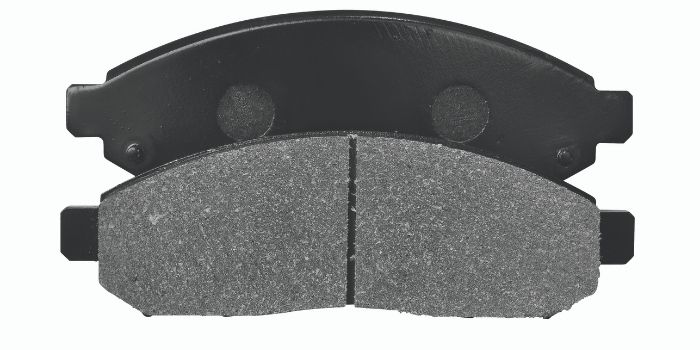
Brake pads are an essential part of any vehicle’s braking system.
Since they are responsible for providing the friction that stops the wheels from turning, they endure a lot of wear and tear in the process.
When the time comes for replacement, it’s essential to choose the right type from the several different types of materials on the market – including organic, ceramic, semi-metallic, and other brake pads.
Since all have pros and cons, based on your specific condition, one may be a better fit for your car needs than the other.
But in general, here’s what you need to know about each type to make the best decision…
Organic Brake Pads
Organic brake pads — or Non-Asbestos Organic (NAO) pads — are the “quiet achievers” of the braking world.
They’re built for comfort and everyday drivability rather than raw performance.
But don’t underestimate them — their refined composition makes them the go-to choice for most passenger vehicles today.
Construction
These pads are made from a composite of non-metallic fibers such as Kevlar, glass, carbon, rubber, and high-temperature resins.
- The resins act as a binding agent, holding all materials together and providing consistent friction.
- Rubber and glass fibers help in shock absorption and vibration damping, ensuring smooth braking.
- Kevlar or carbon fibers add strength, heat resistance, and durability without increasing noise.
Because of their softer nature, organic pads create less wear on brake rotors and operate with minimal squeal or grinding, which explains their popularity among car manufacturers.
Performance Characteristics
Organic pads offer a smooth and progressive brake feel — the kind that inspires confidence in stop-and-go traffic or city driving.
They perform reliably in both wet and dry weather, though they tend to lose some bite when things get icy or extremely hot.
Their operating temperature range is typically up to 400°F–600°F (200°C–315°C), which suits normal driving but not aggressive braking or prolonged downhill runs.
Ideal For
- City and suburban driving where consistent braking and comfort matter more than high heat resistance.
- Commuter cars, family sedans, and light SUVs.
- Drivers who prefer quiet, low-dust brakes and smooth pedal response over performance-grade stopping power.
Advantages (The Pros)
- Economical and widely available — budget-friendly replacement option.
- Excellent cold-bite — delivers responsive braking from a cold start.
- Low noise and vibration — perfect for daily driving comfort.
- Gentle on rotors — causes less wear than metallic alternatives.
- Cleaner operation — produces minimal brake dust.
- Smooth, linear pedal feel that’s easy to modulate.
Limitations (The Cons)
- Shorter lifespan — the softer compound wears faster.
- Limited temperature tolerance — fade can occur during prolonged or heavy braking.
- Reduced efficiency in cold climates — friction levels drop at low temperatures.
- Not ideal for towing or spirited driving — performance falls short under load or heat.
- Higher compressibility — can lead to a slightly softer pedal feel under pressure.
What are Ceramic Brake Pads?
If organic pads are the “gentle whisperers” of the braking world, ceramic brake pads are the refined professionals — smooth, quiet, clean, and composed even under pressure.
Originally developed for luxury and high-performance vehicles, they’ve become a popular choice for drivers who want consistent braking performance without the drama of noise or dust.
Construction
Ceramic brake pads are made from a dense blend of ceramic compounds — similar in composition to pottery or porcelain — combined with fine copper or other metal fibers.
- The ceramic matrix provides excellent heat resistance and stability, keeping friction consistent across varying temperatures.
- The metallic fibers help improve thermal conductivity, allowing heat to dissipate efficiently and preventing brake fade.
- A specialized binder resin holds everything together while maintaining durability and smooth engagement.
This combination gives ceramic pads a harder, more uniform structure, which contributes to their quiet operation and minimal dust output.
Performance Characteristics
Ceramic pads maintain consistent braking power over a broad range of conditions — from city traffic to highway speeds.
They generate finer, lighter-colored brake dust, which doesn’t stick to wheels as much, keeping rims cleaner for longer.
Their operating temperature range typically reaches up to 650°F–850°F (340°C–450°C), higher than organic pads, making them more fade-resistant.
However, they can sometimes feel less aggressive at cold start temperatures and aren’t ideal for extreme racing or heavy towing.
Ideal For
- Luxury cars, EVs, and high-end sedans where smooth, silent braking matters.
- Urban and highway driving, with minimal stress on the brakes.
- Drivers who prioritize low maintenance, less dust, and consistent pedal feel over aggressive performance.
Advantages (The Pros)
- Exceptionally quiet operation — minimal squeal or vibration.
- Stable performance across both wet and dry conditions.
- Low dust output — cleaner wheels and less maintenance.
- High fade resistance — maintains braking power at elevated temperatures.
- Smooth, linear pedal feel that’s easy to modulate.
- Longer rotor life than semi-metallic pads in most normal conditions.
Limitations (The Cons)
- Higher cost — typically the most expensive type of pad.
- Can wear faster in very cold or extreme-duty situations.
- Slightly harder on rotors than organic pads.
- Not ideal for racing, towing, or repeated heavy braking.
- Reduced cold-bite until the pads warm up to their optimal temperature range.
Organic vs Ceramic Brake Pads: Key Differences
When it comes to replacing your brake pads, “organic” and “ceramic” often compete for your attention — a bit like choosing between comfort food and fine dining.
Both will stop your car safely, but they do so with very different personalities under the pedal.
Here’s how they compare on the metrics that matter most — from durability to dust, and everything in between.
1. Longevity
Ceramic brake pads generally outlast organic ones, thanks to their denser material composition and superior heat resistance.
Their hard ceramic structure wears down slowly, making them ideal for long-term use in typical driving conditions.
Organic pads, on the other hand, are softer and tend to wear out faster — especially under heavy braking or frequent stop-and-go traffic. They also leave behind more dust as they wear.
Verdict: Ceramic pads win in terms of lifespan and durability.
2. Stopping Power
Both offer excellent stopping ability, but the difference lies in consistency.
Organic pads provide a strong initial bite and a smooth, progressive brake feel — perfect for everyday city driving.
However, under high temperatures or aggressive braking, they can lose friction and feel less responsive.
Ceramic pads deliver more consistent stopping power across temperature ranges. They may feel a bit softer initially (especially when cold) but maintain steady performance as they heat up.
Verdict: Ceramic pads offer more reliable braking at high temperatures; organic pads shine in normal city conditions.
3. Brake Fade and Noise
Brake fade happens when pads lose effectiveness due to excessive heat.
Ceramic pads handle heat exceptionally well — they dissipate it efficiently and maintain braking force during prolonged stops. They also operate quietly, with minimal squealing or vibration.
Organic pads can fade faster during extended braking or downhill drives. However, they’re also impressively quiet at lower temperatures and speeds.
Verdict: Ceramics outperform under heat; organics are whisper-quiet in daily driving.
4. Effect on Rotors
Because organic pads are softer, they’re gentler on rotors — resulting in less rotor wear and fewer chances of scoring.
Ceramic pads, while smoother in operation, are slightly harder on rotors over long use due to their density and fine metallic content.
Verdict: Organics are easier on rotors; ceramics balance rotor wear with cleaner braking.
5. Cost
Organic pads are budget-friendly and widely available — a great choice for everyday drivers looking for economical maintenance.
Ceramic pads are the premium option: pricier up front, but they can offset that cost with longer service life and cleaner operation.
Verdict: Organic wins for affordability; ceramic for long-term value.
| Feature | Organic Brake Pads | Ceramic Brake Pads |
|---|---|---|
| Material Composition | Kevlar, glass, rubber, resins | Ceramic compounds with fine metal fibers |
| Longevity | Shorter lifespan | Longer lifespan |
| Stopping Power | Strong initial bite, softer under heat | Consistent, stable braking at all temps |
| Brake Fade Resistance | Moderate – fades under heavy heat | Excellent – resists fade effectively |
| Noise Level | Very quiet | Extremely quiet |
| Effect on Rotors | Gentle – minimal wear | Slightly harder – may increase rotor wear |
| Dust Production | Moderate, darker dust | Very low, light-colored dust |
| Performance in Cold Weather | Reliable | Slightly reduced cold-bite |
| Cost | Affordable | Expensive but long-lasting |
| Best For | City driving, light vehicles | Premium, highway, and modern vehicles |
What are the Other Good Brake Pad Materials for Cars?
While organic and ceramic brake pads dominate most modern vehicles, they’re not the only players on the road.
Depending on driving style, vehicle type, and performance needs, you’ll also find several other brake pad formulations — each engineered for a specific balance of stopping power, durability, and comfort.
Let’s look at the other major types:
1. Semi-Metallic Brake Pads
Semi-metallic pads are the workhorses of the braking world — tough, dependable, and built to handle heat.
They’re made from a blend of 30%–70% metals such as steel, iron, or copper, mixed with graphite lubricants and resin binders.
This metallic mix offers excellent heat dissipation, strong braking force, and good fade resistance, which is why they’re commonly used in SUVs, trucks, and performance cars.
However, the trade-off is more noise, dust, and rotor wear compared to ceramic or organic pads.
Best For: Heavy vehicles, performance cars, and drivers who prioritize braking strength over silence.
2. Low-Metallic NAO (Non-Asbestos Organic) Pads
Think of low-metallic NAO pads as the middle child between organic and semi-metallic types.
They’re made mostly from organic materials but include 10–30% metal content (usually copper or steel) to improve heat transfer and friction consistency.
They deliver better braking performance than pure organics, but they’re slightly noisier and dustier.
Best For: Daily drivers who want a little more performance without going full metallic.
3. Fully Metallic Brake Pads
Used primarily in racing and heavy-duty applications, these pads are made almost entirely from sintered metals like iron, copper, and bronze.
They provide superior stopping power and fade resistance under extreme heat but are too aggressive for regular street use — they can chew through rotors and make a lot of noise.
Best For: Track cars, race vehicles, and extreme-performance braking systems.
4. Carbon-Ceramic Brake Pads
At the top of the food chain are carbon-ceramic brake pads, often found in supercars, high-end sports cars, and performance EVs.
They combine carbon fiber with a ceramic matrix, resulting in an ultra-light, heat-resistant pad that performs flawlessly at temperatures up to 1,200°C.
They generate very little dust, almost zero fade, and last incredibly long — but come with a supercar price tag.
Best For: High-performance and luxury vehicles where cost isn’t a concern and perfection is expected.

What Causes Uneven Brake Pad Wear – How to Fix the Problem?
In general, front brake pads wear out sooner than rear brake pads because they do most of the work when stopping the vehicle.
It’s recommended to have your brakes checked at least once a year, or every 12,000 miles, whichever comes first. This way, you can prevent brake problems early.
Just in case you think that your new car’s or truck’s brake pads are wearing out abnormally or unevenly, there can be several reasons for this situation. The most common ones include the following:
1. Incorrect Installation
If your brake pads are not installed correctly, they can rub against the rotors in an uneven way, causing one side to wear down faster than the other.
If you think the problem is caused due to incorrect installation, simply have a professional mechanic check your brakes and make sure that the pads are installed correctly.
It’s also important to use the same type of brake pads on both sides of your vehicle. Do not utilize brake pads from different manufacturers or materials since they will wear down at varying rates and have varying lifespans.
2. Faulty Wheel Bearings
Wheel bearings not working properly can cause the wheels to wobble slightly when you brake, which in turn will cause the brake pads to wear.
If you have a squeaking or grinding sound when your car comes to a stop, it’s time to get your wheel bearings replaced by an expert mechanic.
3. Uneven Tire Pressure
If your tires are not inflated to the proper pressure, they can also cause the vehicle to pull to one side when you brake, which will eventually cause the pads on that side to wear down faster.
To fix this problem, check tire pressure and inflate the tires to the proper levels on a regular basis.
4. Worn Suspension Components
Shocks or struts that are worn out can also cause the vehicle to lean to one side when you brake, causing the pads on that side.
To prevent the issue, have a professional mechanic inspect the suspension and replace it if necessary.
5. Rotor Thickness Variation
This can be another common cause of uneven brake pad wear (either left or right).
Ideally, your brake pads are supposed to be in contact with the rotors. When it comes to rear rotors, however, you’ll really want to bring everything together.
In such circumstances, any little pressure on the brake pedal causes the vehicle to come to a stop instantly and without any dead spots.
And, if your rotors are not all the same thickness, they can cause the pads to wear down unevenly.
Besides all the above, these may be the reasons causing one side or brakes to wear down faster than the other.
- Misaligned Brakes
- Sticky Caliper Pistons
- Warped, Dirty, or Rusty Rotors
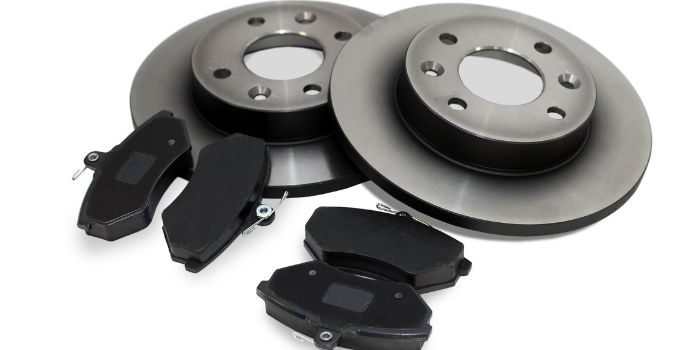
Factors Influencing Brake Pad Life – How to Tell It’s Time to Replace Them?
Your car’s brake pads do the heavy lifting every time you slow down.
By pressing against the rotors, they generate friction that converts kinetic energy into heat — the fundamental process that stops your wheels from spinning.
But over time, all that friction takes a toll. Brake pads gradually wear down, and eventually, they’ll need to be replaced.
The lifespan of your pads depends on several factors — from how you drive to what you drive on.
Let’s break it down.
1. Your Driving Style
Your right foot has more power over brake life than you might think.
- Aggressive drivers who brake hard and frequently (especially from high speeds) generate more heat and friction, which accelerates pad wear.
- Smooth drivers who anticipate traffic, coast before stops, and brake gently tend to get much longer life from their pads.
A simple rule: The more often you stomp, the sooner you’ll swap.
2. The Quality of Your Brake Pads
Not all brake pads are created equal.
- Premium pads use higher-quality friction materials (like ceramic or advanced semi-metallic compounds) that resist heat and wear better.
- Budget pads, while cheaper upfront, can wear out faster — sometimes twice as quickly — and may create more dust or noise.
Investing in quality pads might cost more now, but it saves on replacements (and rotor damage) later.
3. The Type of Driving You Do
Where and how you drive matters.
- Stop-and-go city driving puts constant demand on your brakes, leading to faster wear.
- Highway driving, with longer stretches between braking, is far easier on the pads.
- Mountain or towing conditions increase brake temperatures dramatically, reducing pad life further.
If your car handles frequent stops, heavy loads, or steep grades, expect more frequent pad replacements.
4. The Condition of the Overall Brake System
Even the best pads can’t perform if the rest of the braking system isn’t healthy.
- Worn rotors, sticking calipers, or leaking brake fluid can cause uneven pad wear or reduce braking efficiency.
Regular inspections and timely maintenance keep everything in sync and can significantly extend pad life.
Having your brakes checked every 10,000–15,000 miles is a good preventive habit.
How Long Do Brake Pads Last – How to Tell It’s Time to Replace Brake Pads?
There’s no single number, but most car brake pads last between 30,000 and 70,000 miles, depending on your driving conditions and habits.
Off-road, towing, or hilly terrain can shorten that lifespan dramatically, while gentle highway cruising can stretch it close to the upper limit.
Your brake pads won’t send you an email when it’s time — but they do leave clues. Here are the most common warning signs:
- Squealing or squeaking sounds: Often the first sign — this high-pitched noise comes from a wear indicator that alerts you when the pad material is thinning.
- Grinding noise: Indicates that the friction material has worn down to the metal backing plate. This can damage rotors and drastically reduce braking power.
- Vibration or pulsation in the brake pedal: Could suggest uneven pad wear or warped rotors.
- Increased stopping distance: If it takes longer than usual to stop, your pads may be past their prime.
- Brake warning light: Some cars feature electronic wear sensors that trigger a dashboard alert when replacement is due.
Driving on worn-out pads isn’t just noisy — it’s dangerous. Once the friction layer is gone, the metal backing plate grinds directly against the rotor, leading to costly damage and potential brake failure.
Replacing pads before they reach that stage ensures safety, protects your rotors, and keeps your braking system performing like it should.
Final Thoughts: Which Brake Pad Should You Choose?
At the end of the day, your ideal brake pad choice depends on what kind of driver you are and how you use your vehicle.
If you value quiet operation, smooth pedal feel, and mostly drive in city traffic or moderate conditions, organic brake pads deliver great everyday performance at a reasonable cost.
However, if you’re after cleaner wheels, longer service life, and consistent stopping power under a wide range of temperatures, ceramic brake pads are worth the premium.
For most modern cars and SUVs, ceramic pads tend to strike the best balance between comfort, performance, and longevity.
But if your driving involves heavy loads, steep descents, or frequent stop-and-go conditions, don’t hesitate to explore semi-metallic or low-metallic alternatives for added durability.
In short — choose the pad that best matches your driving style, not just your budget.
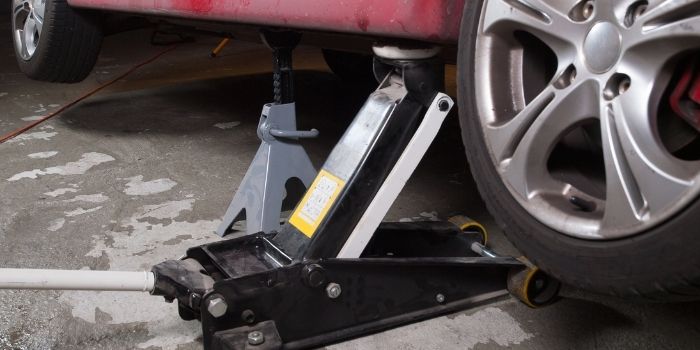
Lifting a vehicle looks deceptively simple—slide the jack under, pump the handle, and up she goes. Until it doesn’t. Anyone Read more
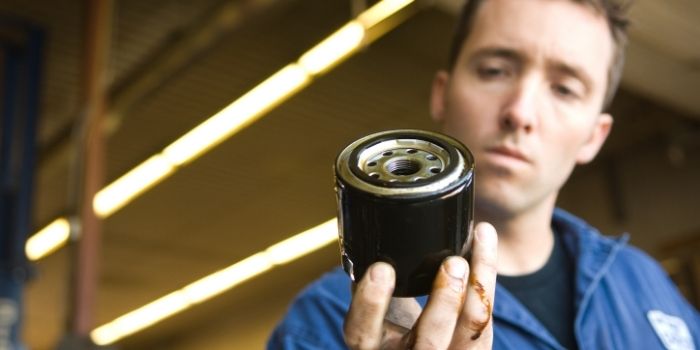
Engines are very sensitive; a few undesirable particles might do significant harm to your vehicle. Therefore an oil filter is Read more

If you're like most people, you probably think of Lamborghinis when you hear the word "Lambo doors." But did you Read more
Racing car spoilers have been a popular topic of debate for as long as cars have raced. Some people claim Read more

Based in Orem (Utah) John Paterson graduated from Utah Valley University and has begun writing in 2009. He has a large wealth of experience in writing articles related to cars, automotive repair, wheels, cleaning/maintenance, and much more. He has also written instructional articles in a similar niche for a few online publications as well. Currently, he works as a mechanic in his personal garage shop where he loves serving his countrymen from his heart.