
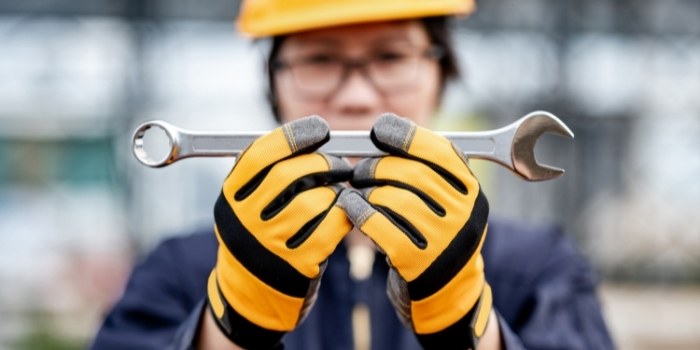
If you’re new to car repair projects or just looking for a better way to complete them, you might be wondering what a combination wrench is.
This tool is perfect for tightening and loosening bolts and nuts of all sizes.
Here we’ll explain what it is, how to use it, and some of its benefits. Keep reading to learn more!
What is a Combination Wrench?
A combination wrench is a tool that can be used to loosen or tighten bolts and nuts.
It has a head-on one end that fits over the bolt or nut and a handle on the other end that you use to turn it.
The head of the wrench is usually adjustable, so you can adjust it to fit different sizes of bolts and nuts.
Advantages
There are several benefits to using a combination wrench over other types of wrenches.
First, they’re very versatile and can be used on a variety of different projects.
Second, they’re relatively easy to use, so even if you’re new to car repair, you should be able to figure out how to use one without too much trouble.
Finally, combination wrenches are usually very affordable, so they’re a great option if you’re on a budget.
Disadvantages
There are a few disadvantages to using a combination wrench as well.
First, they’re not always the best option for very tight spaces. If you’re working in a confined area, you might want to consider another type of wrench.
Second, they can be difficult to use if you have large hands. If you have trouble holding small tools, a combination wrench might not be the best option for you.
Finally, they’re not always as durable as other types of wrenches. If you’re looking for a tool that will last a long time, you might want to consider another option.
How to Use a Combination Wrench?
If you’re looking for a versatile and affordable tool, a combination wrench is a great option.
Just be sure to carefully read the instructions before using one so you don’t strip the bolt or nut you’re working on.
Using a combination wrench is relatively simple if you follow the steps here…
- First, you’ll need to identify the size of the bolt or nut that you’re working with.
- Then, you’ll need to adjust the head of the wrench so that it’s the same size.
- Once the head is the right size, you can place it over the bolt or nut and turn it in the direction you need to go.
- If you’re tightening a bolt or nut, you’ll want to turn the wrench clockwise.
- If you’re loosening a bolt or nut, you’ll want to turn the wrench counterclockwise.
It’s important to be careful when you’re using a combination wrench, as you can easily strip the bolt or nut if you turn it too much.
Combination Wrench Uses in Car Repairs
Now, you might be thinking: “Can’t I just use pliers or a socket set?”
Sure, but a combination wrench offers a unique combination of precision, accessibility, and ease of use that pliers can’t match.
Socket sets are great, but in tight corners where a ratchet can’t fit, the slim profile of a combination wrench becomes your best friend.
It’s compact, reliable, and often the difference between a weekend of frustration and a weekend of triumph.
Let’s dive into five essential ways a combination wrench will save your sanity—and maybe even your wallet—when working on your car.
1. Tightening and Loosening Bolts
Let’s start with the obvious. Your car is basically a complex puzzle held together by bolts and nuts.
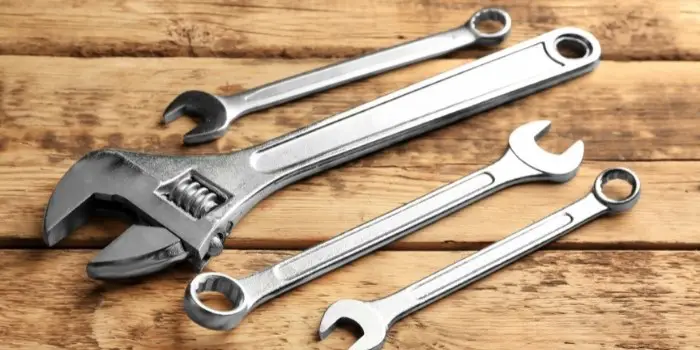
A combination wrench, as the name suggests, has two sides: an open-end and a box-end.
The open-end is perfect for quick adjustments, especially in tight spaces where your fingers can barely reach.
Meanwhile, the box-end gives you a more secure grip and reduces the risk of rounding off your bolts.
Whether you’re tightening the battery terminals or loosening the bolts on your alternator, the combination wrench is a reliable companion that doesn’t complain when you apply a little extra torque.
2. Adjusting Your Suspension Components
Your car’s suspension system isn’t just there to make the ride smooth; it’s a precision-engineered mechanism that requires the right amount of torque to keep everything in line.
If you’ve ever tried to tweak a sway bar or replace shock absorbers, you know how many nuts and bolts you have to deal with. Enter the combination wrench.
Its dual-function design allows you to hold one side of a bolt while turning the nut on the other, making tricky suspension adjustments a lot less stressful.
Bonus: the ergonomic design minimizes hand fatigue, so you don’t leave the garage looking like you wrestled a bear.
3. Working on Brake Components
Brakes are arguably the most important part of your car—yes, more important than that aftermarket spoiler you splurged on.
Changing brake pads or adjusting the caliper can be a headache without the right tool. A combination wrench lets you access the stubborn caliper bolts and brake line fittings with precision.
The box-end is perfect for gripping hex bolts that are often recessed, while the open-end can handle the slightly larger nuts without stripping them.
Using the right size wrench here isn’t just about convenience—it’s a safety issue.
4. Engine Maintenance and Minor Repairs
Engines are like the heart of your car: complex, delicate, and expensive to fix if you mess up.
Yet, every DIY enthusiast knows that small repairs—like changing spark plugs, tightening hose clamps, or adjusting the alternator belt tension—require a reliable hand tool.
A combination wrench lets you maneuver around tight spaces without dropping bolts into the abyss of the engine bay.
Pro tip: always match the wrench size to the bolt size, and keep a rag handy—you’ll thank me when that greasy bolt doesn’t slip and land somewhere you can’t reach.
5. Miscellaneous “Oh, I Didn’t Know I Needed This” Moments
Sometimes, car repairs are unpredictable. Maybe your side mirror is loose, or your license plate bracket has fallen off, or you just want to tighten the little nuts holding the underbody shield.
The combination wrench shines in these miscellaneous moments. Its versatility means you can handle almost any standard-sized bolt and nut without scrambling for a dozen different tools.
And let’s be honest, nothing feels more satisfying than reaching for one tool and knowing it’s going to get the job done—quickly, efficiently, and without drama.
Open-End vs Box Wrench: What’s the Difference?
When it comes to wrenches, there are a few different types to choose from.
Two of the most popular options are open-end wrenches and box wrenches.
So, which one is right for you? Here’s a look at the differences between these two types of wrenches to help you decide.
Open-end wrench
An open-end wrench is a type of wrench that has an open slot on one end.
This allows you to slip the wrench over the bolt or nut without having to remove it from the surrounding area.
Open-end wrenches are available in a variety of sizes, so you can find one that’s perfect for the job you’re working on.
Box wrench
A box wrench is a type of wrench that has a closed-loop on one end.
This allows you to slip the wrench over the bolt or nut and then tighten or loosen it without having to remove it from the surrounding area.
Box wrenches are available in a variety of sizes, so you can find one that’s perfect for the job you’re working on.
If you’re not sure which type of wrench to choose, it really depends on the job you’re working on.
For example, if you’re working in a tight space, an open-end wrench might be the better option.
But if you’re working on a large project, a box wrench might be the better choice. Ultimately, it’s up to you to decide which type of wrench is best for the job at hand.
What Size Combination Wrenches to Work on Cars?
When it comes to working on cars, having a good set of combination wrenches (open-end on one side, box-end on the other) is essential.
The sizes you’ll need depend a lot on the car make and model, but here’s a practical guide based on typical automotive fasteners:
Metric Wrenches (Most modern cars, especially Japanese/European)
- Common small sizes: 8 mm, 10 mm, 12 mm
- Medium sizes (for engine, suspension, brakes): 13 mm, 14 mm, 15 mm, 17 mm, 18 mm
- Larger sizes (for suspension, drivetrain, wheels): 19 mm, 21 mm, 22 mm, 24 mm
SAE / Imperial Wrenches (Older US cars, some trucks)
- Small: 5/16″, 3/8″, 7/16″
- Medium: 1/2″, 9/16″, 5/8″, 11/16″, 3/4″
- Large: 13/16″, 7/8″, 15/16″, 1″
Tips:
- Start with a 10–19 mm metric set (or 3/8″–3/4″ SAE) — these cover ~90% of automotive nuts and bolts.
- Include at least one larger size (22 mm or 7/8″) for suspension bolts or wheel nuts.
- Ratchet wrenches or flex-head combination wrenches can save time in tight engine bays.
- Avoid cheap sets — poor tolerances can round off nuts and bolts.
FAQs
Do you need a set of combination wrenches?
If you’re just starting out with car repairs, you might not need a full set of combination wrenches.
However, if you do a lot of car repairs or plan on doing more in the future, it’s a good idea to invest in a set.
This way, you’ll always have the right size wrench for the job. Plus, a full set of wrenches looks impressive and can be a great conversation starter if you’re working on a car repair project with someone else.
No matter what your needs are, there’s a combination wrench out there that’s perfect for you.
Are ratcheting combination wrenches worth it?
Ratcheting combination wrenches are a bit more expensive than regular combination wrenches, but they’re worth the investment if you do a lot of car repairs.
These wrenches have a ratcheting mechanism that makes it easy to loosen or tighten bolts and nuts.
If you’re someone who does a lot of car repairs, a ratcheting combination wrench is a great investment.
Can a combination wrench be used as a screwdriver?
No, a combination wrench cannot be used as a screwdriver. The head of the wrench is not designed to fit into screws.
Plus, using a wrench as a screwdriver can damage the head of the wrench and strip the screw.
If you need to remove a screw, use a screwdriver, not a wrench.
Final Thoughts
Overall, a combination wrench is a great tool to have in your toolbox.
They’re versatile, easy to use, and relatively affordable. However, they’re not always the best option for every situation.
If you’re not sure whether a combination wrench is right for your project, be sure to consult with a professional before you get started.

A lot of car owners believe that larger wheels are more visually appealing due to their lower sidewalls. This allows Read more
The hydraulic floor jack is a hydraulic tool with a saddle, rollers, and a hydraulic pump that can easily raise Read more
If you’ve ever wondered what keeps those old tractors, vintage motorcycles, or rugged off-road vehicles so tough and reliable, the Read more
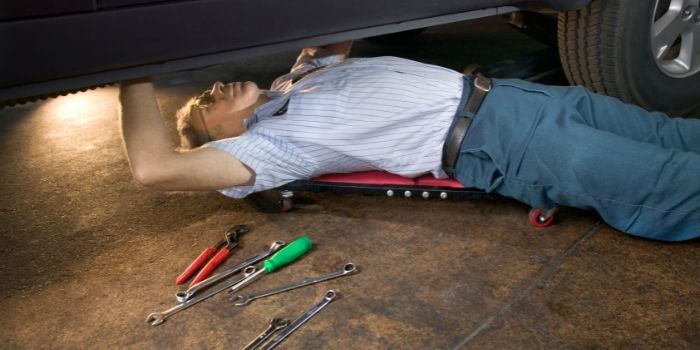
A mechanics creeper (also called a car creeper or creeper trolley) is a simple yet quite popular device used in Read more

Based in Orem (Utah) John Paterson graduated from Utah Valley University and has begun writing in 2009. He has a large wealth of experience in writing articles related to cars, automotive repair, wheels, cleaning/maintenance, and much more. He has also written instructional articles in a similar niche for a few online publications as well. Currently, he works as a mechanic in his personal garage shop where he loves serving his countrymen from his heart.